
How Clipper Blades Are Made: MIM Process [18 Steps]
A detailed look inside clipper blade manufacturing using MIM (Metal Injection Molding) powder metallurgy. Covers the 18-step process, materials, quality control, and why MIM produces superior blades.
Most people never think about how clipper blades are made. They buy a blade, use it until it's dull, sharpen it or replace it, and move on. But the manufacturing process behind a precision clipper blade is remarkably complex — and the method used directly affects hardness, edge retention, dimensional accuracy, and ultimately how well the blade performs in your hand.
At SUMTHIN, we've been manufacturing clipper blades since 2004 using MIM (Metal Injection Molding) powder metallurgy — one of the most advanced metal forming processes available. This article explains exactly how it works, why it produces superior blades, and what happens at each stage of our 18-step production process.
What Is MIM (Metal Injection Molding)?
MIM combines the design flexibility of plastic injection molding with the material properties of wrought metals. Instead of stamping a blade out of sheet metal (the traditional method), MIM starts with ultra-fine metal powder mixed with a polymer binder, injects it into a precision mold, removes the binder, and sinters the part at near-melting temperatures to achieve full density.
MIM vs Traditional Stamping
| Property | Stamped Blades | MIM Blades |
|---|---|---|
| Dimensional tolerance | ±0.1mm typical | ±0.03-0.05mm |
| Surface finish | Requires secondary grinding | Near-finished from mold |
| Material density | 100% (full sheet) | 96-99% (after sintering) |
| Tooth geometry | Limited by die and punch | Complex 3D shapes possible |
| Material waste | 20-40% scrap from blanking | <3% waste (recyclable) |
| Hardness achievable | HRC 55-58 typical | HRC 60-62 |
| Production volume sweet spot | High volume, simple shapes | Medium-high volume, complex shapes |
The 18-Step Manufacturing Process
Here's what happens from raw metal powder to a finished blade ready for shipping. Our factory runs this process across 40,000 m² of production floor with 50+ R&D and quality engineers.
Stage 1: Feedstock Preparation (Steps 1-3)
- Powder selection: We start with gas-atomized 440C or 17-4PH stainless steel powder, particle size 5-15 micrometers. The powder grade determines final hardness, corrosion resistance, and edge retention.
- Binder mixing: The metal powder is blended with a multi-component polymer binder system (typically polyoxymethylene + wax + polyethylene) in a twin-screw compounder at controlled temperature. The ratio is approximately 60% metal / 40% binder by volume.
- Pelletizing: The feedstock mixture is extruded into uniform pellets for consistent injection molding. Each pellet has identical metal-to-binder ratio — this is critical for preventing density variations in the final part.
Stage 2: Injection Molding (Steps 4-6)
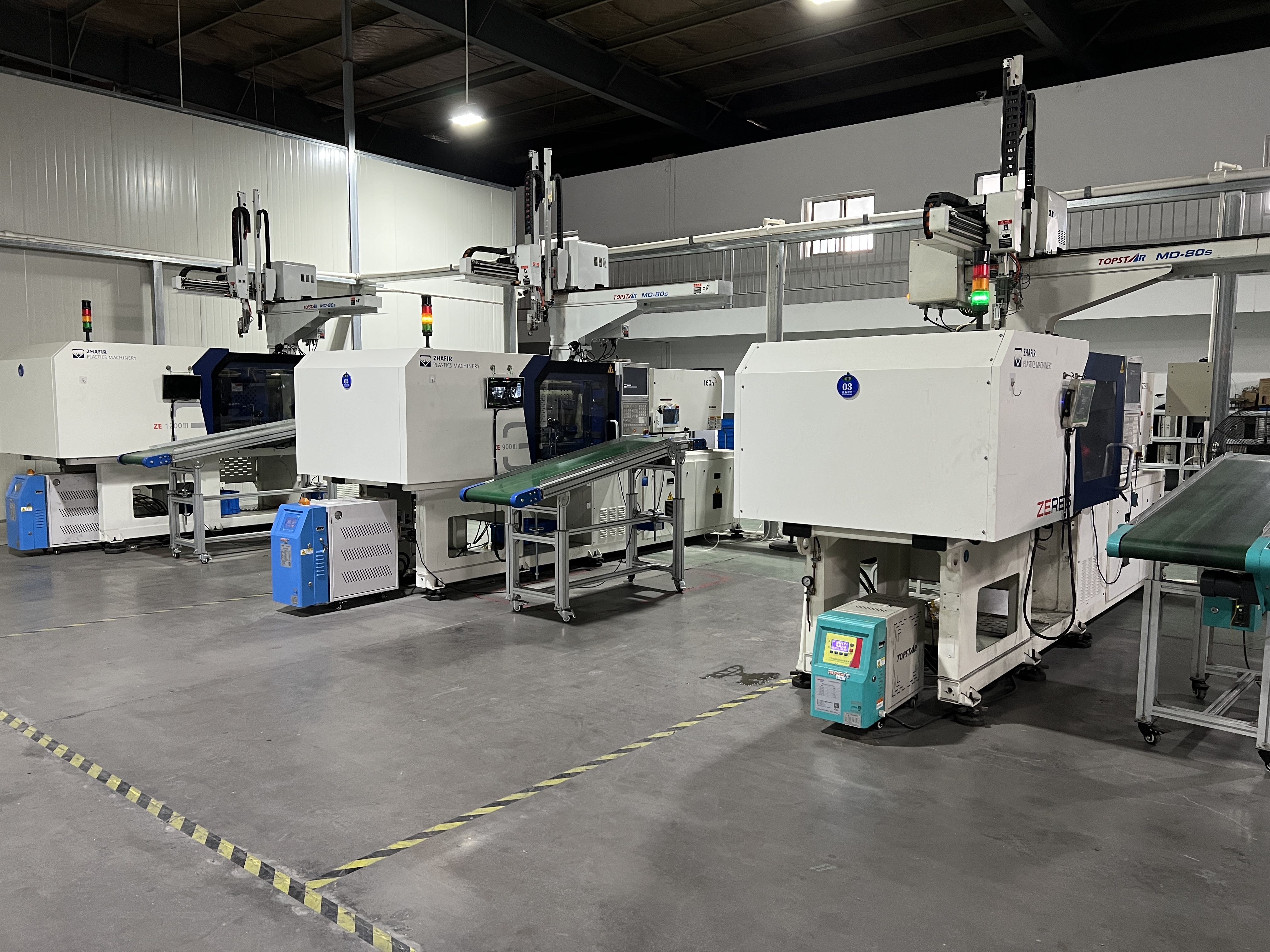
- Mold tooling: Precision steel molds are CNC-machined to create the exact blade geometry — tooth profile, mounting rails, spring channels. Our in-house tool shop builds and maintains all molds (we currently maintain 200+ active mold sets). Mold tolerances are ±0.01mm.
- Injection: Feedstock pellets are heated to 160-190°C and injected into the mold cavity under 50-150 MPa pressure. Cycle time is 15-30 seconds per part. The output at this stage is called a "green part" — it looks like the final blade but contains the polymer binder and is approximately 20% larger (to account for sintering shrinkage).
- Green inspection: Every green part is visually inspected for short shots, flash, and surface defects. Defective parts are recycled — the feedstock is re-pelletized with zero waste.
Stage 3: Debinding (Steps 7-9)
- Catalytic debinding: Green parts are placed in a catalytic oven with nitric acid vapor at 110-130°C. The acid breaks down the primary binder (polyoxymethylene) into formaldehyde gas, which is safely exhausted. This removes approximately 90% of the binder volume. Duration: 6-12 hours depending on part thickness.
- Thermal debinding: Remaining binder components (wax, polyethylene) are burned off in a separate furnace at 300-600°C under controlled atmosphere. This step is slower and more delicate — too fast and the part cracks from internal gas pressure.
- Brown part inspection: After debinding, the "brown part" is extremely fragile (imagine a sandcastle). Parts are handled with care and inspected for cracks, warping, or incomplete debinding.
Stage 4: Sintering (Steps 10-12)
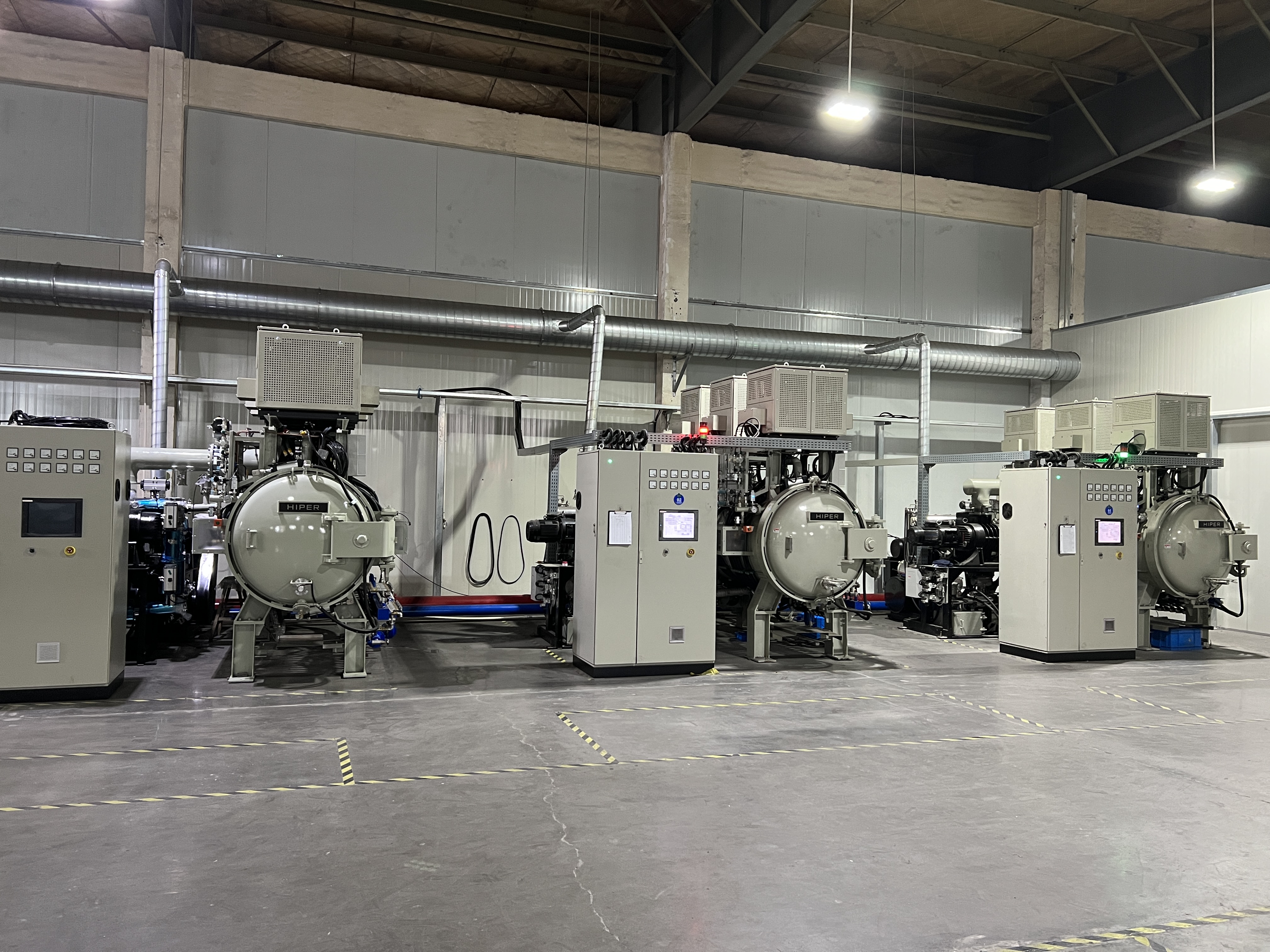
- Sintering: Brown parts enter a high-temperature vacuum or hydrogen atmosphere furnace. Temperature ramps to 1250-1380°C (just below the melting point of the steel alloy). At this temperature, metal particles fuse together through solid-state diffusion, achieving 96-99% theoretical density. The part shrinks uniformly by approximately 18-20% — this is why green parts are made oversized. Sintering cycle: 12-24 hours.
- Controlled cooling: The furnace cools at a programmed rate to prevent thermal stress and cracking. Cooling from sintering temperature to room temperature takes 6-8 hours.
- Sintered part inspection: Dimensional checks using CMM (coordinate measuring machine) to verify shrinkage was uniform and within tolerance. Density is measured using Archimedes method. Any part below 96% density is rejected.
Stage 5: Post-Processing (Steps 13-18)
- Heat treatment: Parts are austenitized at 1040-1060°C, oil-quenched, and tempered at 200-300°C to achieve target hardness of HRC 60-62. This is the same heat treatment used for high-end knife steels.
- Surface grinding: Critical surfaces (tooth tips, mating faces) are precision-ground to final dimensions. Flatness tolerance: ±0.01mm. This ensures the cutter and comb mate perfectly with zero gap at the cutting edge.
- Lapping: Tooth cutting edges are lapped on a diamond disk to achieve razor sharpness. This is the same process used by professional blade sharpening services, but done at the factory with more precise equipment.
- Cleaning and coating: Parts are ultrasonically cleaned to remove grinding residue, then coated with a thin layer of protective oil to prevent oxidation during storage and shipping.
- Final inspection: Every blade undergoes a multi-point quality check — dimensional, hardness (Rockwell test), sharpness (cutting test on synthetic fiber), visual (10x magnification). Blades are tested in pairs (cutter + comb) to verify proper mating.
- Packaging: Approved blades are individually wrapped, labeled with model number and batch code, and packed in blister packs, cardboard boxes, or bulk packaging per customer specification.
Quality Control: Every Blade Tested
Our QC process isn't statistical sampling — we test every blade. Key checkpoints:
- Hardness: HRC 60-62 verified on every batch with Rockwell tester (calibrated quarterly against NIST-traceable standards)
- Dimensions: CMM measurement on 100% of A5 rail dimensions (these determine whether the blade snaps onto clippers correctly)
- Sharpness: Cutting test on 100% of finished blade sets
- Certifications: ISO 9001:2015, ISO 14001:2015, SGS — audited annually
Why Does Manufacturing Method Matter to Buyers?
For distributors, retailers, and OEM customers, the manufacturing method directly impacts:
- Consistency: MIM parts have tighter dimensional tolerances than stamped parts. This means fewer returns from "blade doesn't fit" complaints.
- Performance: Higher achievable hardness (HRC 60-62 vs 55-58) means longer edge retention and happier end users.
- Cost efficiency at scale: MIM tooling is more expensive upfront but produces parts with less secondary machining. At volumes above 10,000 units, MIM cost-per-part drops below stamped+machined.
- Design flexibility: Need a custom tooth profile, a non-standard mounting rail, or a brand-specific blade geometry? MIM can produce it from a new mold — no need to redesign an entire stamping line.
Frequently Asked Questions
Is MIM the same as powder metallurgy (PM)?
MIM is a subset of powder metallurgy. Traditional PM uses metal powder pressed in a die at room temperature and then sintered. MIM adds the injection molding step, which allows far more complex geometries and tighter tolerances. For clipper blades, MIM is the preferred PM process.
What materials can MIM process?
We routinely process 440C stainless steel (for blades), 17-4PH stainless (for structural components), and low-alloy steels. MIM can also process titanium, tungsten, ceramics, and specialty alloys — though these aren't used for clipper blades.
What is your minimum order quantity for custom MIM blades?
Custom MIM blade projects require a minimum of 5,000 units to justify mold tooling costs. Mold lead time is typically 4-6 weeks. For standard SUMTHIN catalog blades, MOQ starts at 500 units. Learn more about OEM custom manufacturing.
Can I visit your factory?
Yes — we welcome factory visits and audits. We're located in Yanguan Industrial Park, Haining, Zhejiang (approximately 1.5 hours from Shanghai Pudong Airport). Contact us to schedule a visit.