
The Core Difference: Structural Repair vs. Waterproofing
The decision between epoxy and polyurethane injection is not a matter of preference — it is determined by the crack's behavior and the repair objective. Epoxy injection restores the structural integrity of the concrete by welding the crack faces together with a rigid, high-strength bond. Polyurethane injection stops water from passing through a crack by creating a flexible, expanding seal that accommodates ongoing movement.
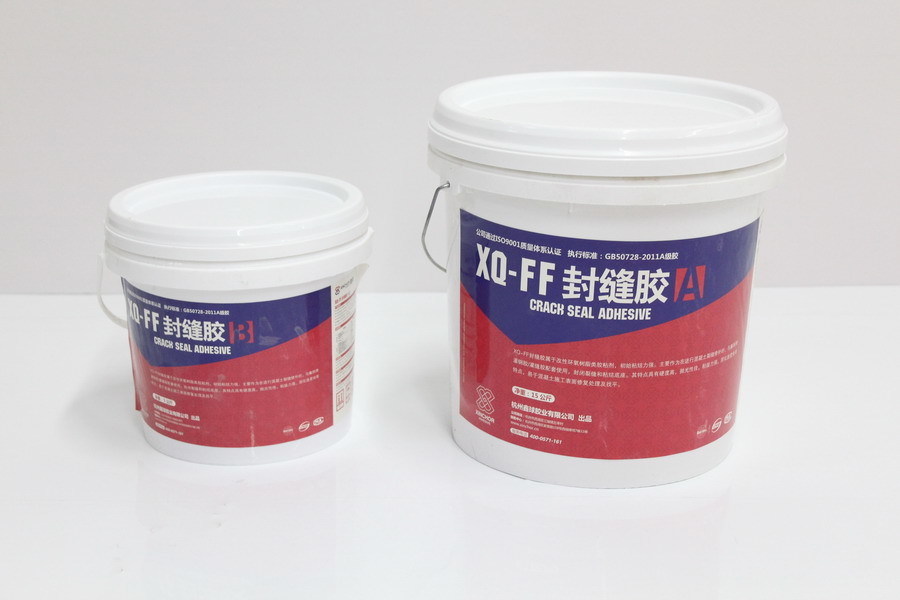
Choosing the wrong material is the most common — and most expensive — mistake in concrete crack repair. We see it regularly: a contractor injects epoxy into an actively leaking basement wall crack, and within weeks the water finds its way around the rigid repair because the crack continues to move with seasonal temperature changes. Or conversely, a structural engineer specifies polyurethane for a cracked beam, and the PU foam provides zero structural capacity — the beam continues to deflect.
As a manufacturer producing both epoxy and polyurethane injection systems, we have no commercial bias toward either product. This guide helps you make the right choice.
Head-to-Head Technical Comparison
| Property | Epoxy Injection (XQ-EI) | Polyurethane Injection (XQ-PU) |
|---|---|---|
| Primary Function | Structural repair — restore tensile capacity | Waterproofing — stop water ingress |
| Bond Strength | ≥ 3.0 MPa (exceeds concrete tensile strength) | Mechanical seal only — no structural bond |
| Tensile Strength | 30–40 MPa | 1.5–3.0 MPa (foam) |
| Compressive Strength | 60–70 MPa | 5–15 MPa (foam) |
| Flexibility | Rigid (elongation 1–2%) | Flexible (elongation 200–400%) |
| Viscosity | 150–1,500 mPa·s (liquid) | 200–500 mPa·s (liquid, pre-reaction) |
| Reaction with Water | None — requires dry substrate | Reacts with water to expand and foam |
| Expansion Ratio | None (zero shrinkage, slight expansion) | 5–20x original volume |
| Cure Time (25°C) | 24–48 hours (full strength) | 3–10 minutes (foam formation) |
| Working Time (25°C) | 50–70 minutes | 3–8 minutes |
| Temperature Range | 5°C to 40°C application; -30°C to 80°C service | 5°C to 35°C application; -20°C to 60°C service |
| Applicable Crack Width | 0.1–5.0 mm | 0.2–10 mm+ |
| Crack Movement Tolerance | None — rigid bond cracks if substrate moves | Up to ± 10% of original crack width |
| Shelf Life | 12 months | 6 months |
When to Choose Epoxy Injection
Epoxy injection is the correct choice when ALL of the following conditions are met:
1. The crack is dormant (not actively moving). Monitor the crack for 7 to 14 days with crack gauges or pencil marks. If the width remains constant (within ± 0.02 mm), the crack is dormant and suitable for rigid epoxy repair. 2. The repair goal is structural restoration. If the crack has reduced the load-carrying capacity of the member — for example, a flexural crack in a beam or a diagonal shear crack in a column — epoxy injection is the only injection method that restores original strength. ACI 562 (Code Requirements for Assessment, Repair, and Rehabilitation of Existing Concrete Structures) recognizes epoxy injection as a valid structural repair method. 3. The crack is dry or can be dried. Epoxy does not bond to wet surfaces. Surface moisture content must be below 4% for reliable adhesion. If the crack is damp, pre-dry with hot air or use a moisture-tolerant epoxy formulation (available as a special order, but with reduced bond strength of approximately 2.0 MPa). 4. The crack width is 0.1 to 5.0 mm. Below 0.1 mm, even low-viscosity epoxy struggles to penetrate. Above 5.0 mm, epoxy is still effective but cementitious grout may be more economical.
Real-World Epoxy Injection Applications
- Bridge girder flexural cracks: Restoring the tensile zone of prestressed or reinforced concrete girders. Our XQ-EI-L (150 mPa·s) is standard for pre-stressed girders with crack widths of 0.1 to 0.3 mm.
- Column shear cracks after earthquake: Post-seismic repair of diagonal cracks in RC columns. The injected epoxy restores the shear capacity, and CFRP wrapping provides additional confinement.
- Industrial floor slab cracks: Structural cracks in warehouse floors carrying forklift traffic. The rigid epoxy bond prevents differential movement at the crack that would destroy floor coatings and cause trip hazards.
- Precast element joint repair: Cracks at precast panel connections, where the joint was originally designed as a monolithic connection.
When to Choose Polyurethane Injection
Polyurethane injection is the correct choice when ANY of the following conditions apply:
1. The crack is actively leaking. PU resin reacts with water — it actually needs moisture to cure. When injected into a wet crack, the resin expands to fill the void and creates a watertight seal. This makes PU the only practical choice for stopping active water ingress during injection. 2. The crack is still moving (live crack). Temperature-induced cracks, settlement cracks in foundations, and construction joints that experience cyclic movement require a flexible seal. PU foam has 200 to 400% elongation — it stretches and compresses with the crack movement without breaking the seal. A rigid epoxy repair in a live crack will simply re-crack. 3. Speed is critical. PU foaming takes 3 to 10 minutes versus 24 to 48 hours for epoxy. For emergency water leak repairs — a tunnel flooding, a basement wall breached during a storm — PU injection provides immediate results. 4. The crack is not structural. Shrinkage cracks in basement walls, temperature cracks in retaining walls, and construction joint leaks typically do not affect structural capacity. Waterproofing with PU is sufficient and far more economical than structural-grade epoxy injection.Real-World Polyurethane Injection Applications
- Basement wall leaks: The most common PU injection application worldwide. Foundation wall cracks caused by shrinkage or lateral earth pressure are typically non-structural and can be permanently sealed with flexible PU foam.
- Tunnel lining leaks: Water ingress through segmental lining joints or rock bolt holes. PU injection is the standard method specified by most tunnel operators.
- Swimming pool and water tank cracks: PU provides an immediate water seal, followed by structural repair if needed.
- Dam and reservoir seepage: PU injection into rock fissures and concrete joint leaks where high water pressure demands rapid cut-off.
Two-Stage Injection: When You Need Both
Some situations require both waterproofing AND structural repair. The correct procedure is:
Stage 1: Polyurethane injection to stop water. Inject PU to create a flexible waterproof seal. Wait for full foam expansion and cure (30 minutes to 2 hours depending on formulation and water volume). Stage 2: Epoxy injection for structural repair. Once the crack is dry (the PU has stopped all water flow), re-inject with epoxy through separate ports to fill any remaining voids and restore structural bond. The epoxy will not react with the cured PU foam — it fills the spaces between foam cells and bonds to the concrete crack faces. When to use two-stage injection:- Structural cracks in foundations or retaining walls below the water table
- Earthquake-damaged members that are also exposed to groundwater
- Prestressed concrete tanks with structural and watertightness requirements
Cost Comparison
| Factor | Epoxy Injection | Polyurethane Injection |
|---|---|---|
| Material cost per liter | $15–$25 | $12–$20 |
| Volume needed per meter of crack (1mm width, 200mm depth) | ~200 ml | ~50 ml (expands 5–10x) |
| Material cost per meter of crack | $3.00–$5.00 | $0.60–$1.00 |
| Labor time per meter of crack | 15–25 minutes | 5–10 minutes |
| Equipment | Standard injection pump | Standard injection pump |
| Cure/wait time before loading | 24–48 hours | 30 minutes (waterproof) |
PU injection is approximately 3 to 5 times cheaper per linear meter of crack when comparing material costs alone. However, this comparison is misleading for structural repairs — PU does not restore structural capacity, so using it as a cost-saving substitute for epoxy in structural applications creates a safety hazard.
Decision Flowchart
Follow this logic to select the right injection material:
FAQ
Q: Can I mix epoxy and polyurethane in the same crack? A: Not simultaneously. The two chemistries are incompatible — mixing them creates a weak, poorly cured mass. For two-stage injection, always allow the first material to fully cure before injecting the second. Q: Is polyurethane injection permanent? A: High-quality PU injection (closed-cell foam, not open-cell) provides a durable seal that lasts 10 to 20 years in protected environments (underground, enclosed). UV exposure and temperatures above 60°C accelerate degradation. For exposed exterior cracks, epoxy or cementitious sealing is more durable. Q: Can epoxy injection repair cracks in underwater concrete? A: Standard epoxy cannot — it requires a dry substrate. We offer a moisture-tolerant underwater epoxy (XQ-EI-UW) with bond strength of 2.0 MPa on wet concrete, but its performance is significantly lower than dry-surface injection (3.0+ MPa). For underwater structural repair, consider our underwater repair mortar system instead. Q: What is the maximum water pressure that PU injection can seal against? A: Our standard PU injection resin seals against up to 3 bar (0.3 MPa or approximately 30 meters of water head). For higher pressures — deep tunnels, dam repairs — we offer a high-pressure PU formulation rated to 8 bar, but the injection technique requires specialized equipment and experienced operators. Q: How do I test which injection method was used in an existing repair? A: Core drill through the repaired crack. Epoxy appears as a clear amber or pale yellow solid that is hard and rigid. PU foam appears as a cellular structure (like a sponge) that is flexible and springy. Cementitious grout appears gray-white and powdery when cut.Conclusion
Epoxy and polyurethane serve fundamentally different purposes in concrete crack injection. Epoxy restores structural strength in dormant, dry cracks. Polyurethane provides flexible waterproofing for active or leaking cracks. Using the wrong material wastes money and creates a repair that will fail — sometimes dangerously so if a structural crack is sealed with PU instead of epoxy.
Browse our epoxy and polyurethane injection products or request a technical consultation to determine the right injection system for your project.