
Why Carbon Fiber Is Replacing Steel in Bridge Rehabilitation
Across Southeast Asia, the Middle East, and South America, thousands of reinforced concrete bridges built in the 1970s through 1990s are reaching the end of their original design life. Increased traffic loads, environmental degradation, and insufficient maintenance have left many of these structures in urgent need of strengthening — but traditional methods like steel plate bonding or section enlargement are slow, heavy, and expensive.
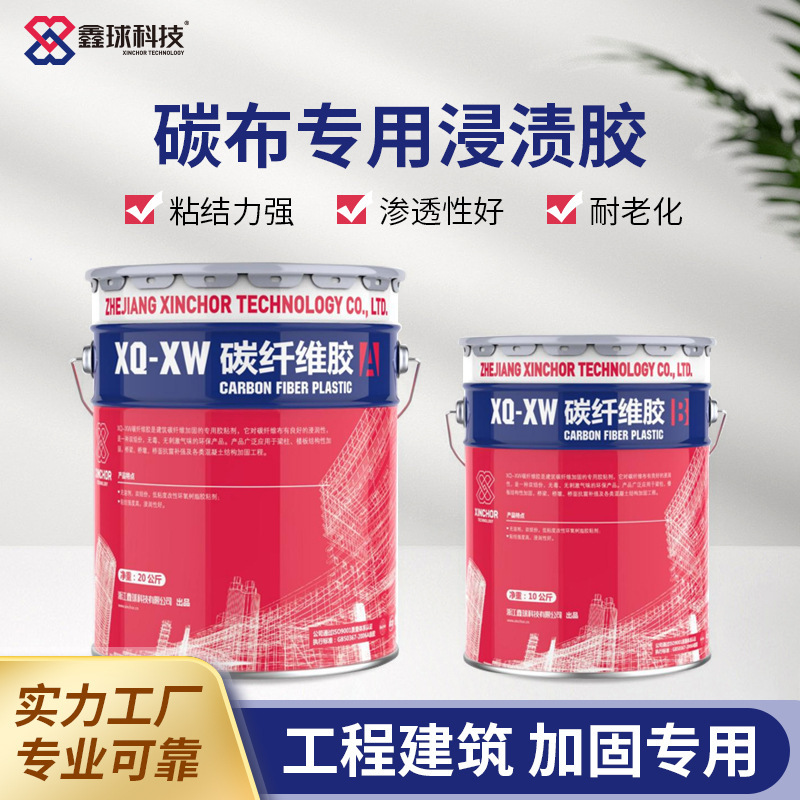
Carbon Fiber Reinforced Polymer (CFRP) systems have become the go-to solution for bridge engineers worldwide. As a manufacturer producing CFRP fabrics and plates since 2005, we have supplied materials for over 1,000 bridge strengthening projects. Here is what we have learned about selecting and applying the right CFRP system.
Material Properties: What Makes CFRP Ideal for Bridges
The fundamental advantage of CFRP over steel comes down to three numbers:
- Tensile strength: Our unidirectional carbon fiber fabrics achieve tensile strength of 3,400 MPa or higher — roughly 8 to 10 times that of structural steel (approximately 400 MPa for Q345 grade).
- Elastic modulus: At 230 GPa or above, the stiffness of our carbon fiber fabrics approaches that of steel (200 GPa) while weighing only one-fifth as much.
- Density: Carbon fiber fabric weighs 200 to 300 grams per square meter, meaning a single worker can carry enough material to strengthen an entire beam span.
CFRP Fabric vs. CFRP Plate: Which to Choose
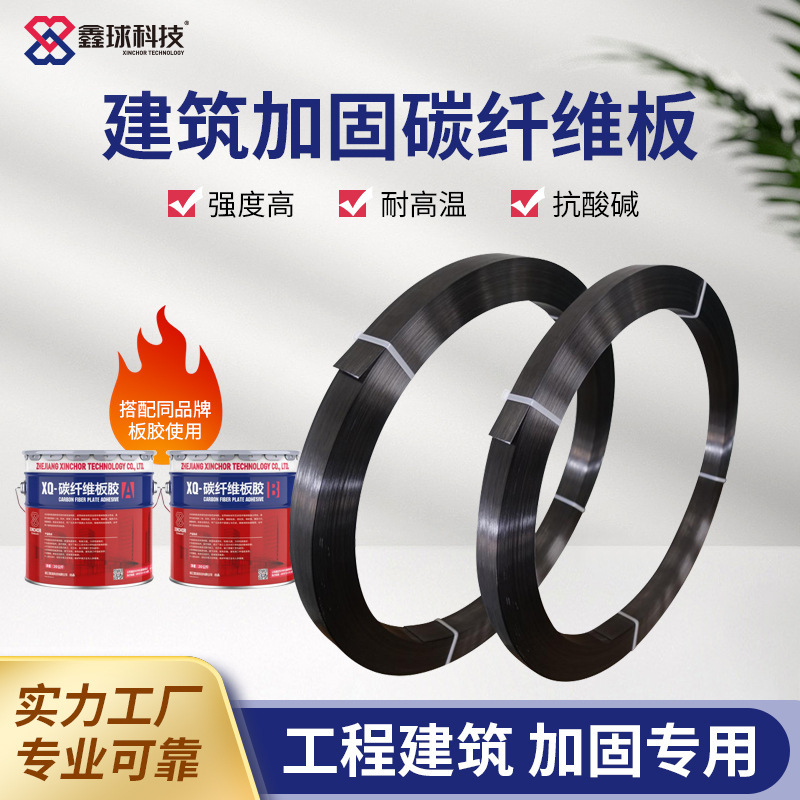
We manufacture both CFRP fabric (wet lay-up system) and pultruded CFRP plates. The choice depends on the application:
| Parameter | CFRP Fabric (200g/m²) | CFRP Plate (1.2mm) |
|---|---|---|
| Tensile Strength | ≥ 3,400 MPa | ≥ 2,400 MPa |
| Elastic Modulus | ≥ 230 GPa | ≥ 160 GPa |
| Conformability | Excellent — wraps around columns, curves | Rigid — flat surfaces only |
| Installation | Wet lay-up with impregnation resin | Adhesive bonding (faster) |
| Best For | Column confinement, irregular shapes, shear | Beam soffit flexural strengthening |
For flexural strengthening of bridge girders, CFRP plates are often the better choice. The factory-controlled fiber volume fraction (65% or higher) delivers consistent quality, and installation is significantly faster — there is no on-site impregnation step. Our CFRP Plate Bonding Adhesive XQ-PB provides shear strength of 18 MPa or above, ensuring the plate-to-concrete bond is stronger than the concrete substrate itself.
For shear strengthening and seismic retrofit, CFRP fabric is preferred. The fabric can be wrapped around beams and columns, providing confinement that dramatically increases ductility. Our 300g/m² unidirectional fabric is the standard choice for bridge piers in seismic zones — two layers of wrapping can increase column ductility by 50% or more.
Installation Process for Bridge Applications
Having worked with hundreds of installation contractors, we have identified the steps that determine success or failure:
1. Surface Preparation Is 80% of the Job
The concrete substrate must be sound, dry, and free of laitance. We recommend:
- Remove deteriorated concrete to a minimum depth of 6mm
- Grind the surface to expose aggregate (CSP 3 to 5 per ICRI guidelines)
- Round all corners to a minimum radius of 20mm (for fabric wrapping)
- Apply our leveling mortar (polymer modified repair mortar) to fill voids deeper than 5mm
2. Primer and Impregnation
For fabric systems, the sequence is:
For plate systems:
3. Environmental Controls
Temperature matters more than most contractors realize:
- Minimum application temperature: 5 degrees Celsius (below this, cure slows dramatically)
- Maximum: 35 degrees Celsius (above this, pot life shortens significantly)
- Substrate moisture: Less than 4% by weight (use a moisture meter)
- Dew point: The substrate temperature must be at least 3 degrees above the dew point
Cost-Benefit Analysis: CFRP vs. Traditional Methods
Based on our project data from over 500 bridge strengthening projects across Asia and the Middle East:
- Material cost: CFRP systems cost 20 to 40% more than steel plate bonding per square meter of treated area
- Installation time: CFRP reduces installation time by 50 to 70% (no welding, no heavy lifting)
- Traffic disruption: Typical CFRP bridge strengthening requires only 3 to 5 days of lane closure vs. 2 to 4 weeks for steel
- Lifecycle cost: Over a 30-year maintenance period, CFRP is 30 to 50% cheaper because it does not corrode, requires no painting, and rarely needs re-inspection
Quality Control: What to Look For in CFRP Materials
As a manufacturer with 26 national patents, we have seen the consequences of substandard materials. Here is what to verify:
Frequently Asked Questions
How long does CFRP bridge strengthening last?
When properly installed with compatible adhesive systems, CFRP strengthening has a design life of 50 years or more. The carbon fiber itself does not degrade under normal environmental conditions. The critical factor is the epoxy resin matrix — our resins are formulated for UV resistance and can withstand service temperatures from minus 40 to plus 60 degrees Celsius.
Can CFRP be applied to wet concrete surfaces?
For standard epoxy systems, the concrete must be dry (moisture content below 4%). However, for emergency repairs or underwater applications, we offer specialized moisture-tolerant primer systems. Contact our engineering team for specific guidance on wet-condition applications.
How many layers of CFRP fabric are needed for bridge strengthening?
The number of layers depends on the structural analysis — specifically the required moment capacity increase. Typical bridge beam flexural strengthening requires 1 to 3 layers of 200g/m² or 300g/m² fabric. Column confinement for seismic retrofit typically requires 2 to 4 layers. We provide free engineering consultation to help determine the optimal configuration for your project.
What testing standards apply to CFRP bridge reinforcement?
The main international standards include ACI 440.2R (USA), TR55 (UK), and JTG/T J22 (China). Our products are tested according to ASTM D3039 (tensile), ASTM D7565 (lap shear), and ISO 527-5. We provide full test reports and can support compliance documentation for your specific regional requirements.
Is CFRP strengthening suitable for prestressed concrete bridges?
Yes. CFRP is widely used for strengthening prestressed concrete bridge girders. The key consideration is that the strengthening design must account for the existing prestress level and the strain compatibility between the prestressed tendons and the externally bonded CFRP. Our high-modulus CFRP plates (elastic modulus of 210 GPa or above) are specifically designed for prestressed applications where deflection control is critical.
Get Expert Guidance for Your Bridge Project
Selecting the right CFRP system for bridge strengthening requires matching the material properties to the specific structural demands. Our engineering team has supported projects across 30+ countries and can provide:
- Material selection based on your design calculations
- Installation guidance and contractor training
- Competitive factory-direct pricing with fast delivery